Securing Your Retirement Bonus: From the Saver’s Credit to the 2027 Saver’s Match

For many hard-working New Yorkers, service-based entrepreneurs, and dual-income professionals, balancing immediate cash flow needs with long-term retirement savings can feel like a delicate balancing act. Fortunately, the Internal Revenue Code provides a highly effective, yet frequently underutilized, incentive designed to reward modest-income savers. The Saver’s Credit—formally known as the Credit for Qualified Retirement Savings Contributions—can put real money back into your pocket during tax season, serving as an immediate reward for building your financial future.
However, the landscape is about to shift dramatically. Under the SECURE 2.0 Act, the Saver's Credit will undergo a major structural transformation beginning in the 2027 tax year. The credit will be replaced by the "Saver's Match," a program that redirects this tax-season benefit from a direct reduction of your tax bill into a federal matching contribution deposited straight into your retirement account. For proactive planners, understanding this transition now is key to capturing the final years of the credit while preparing your accounts for the upcoming match system.
The Mechanics of the Saver’s Credit Through 2026
Through the 2026 tax year, the Saver's Credit remains a nonrefundable tax credit designed to offset your federal income tax liability. Because it is a credit rather than a deduction, it reduces your final tax bill dollar-for-dollar. Crucially, the IRS allows this benefit to be claimed in addition to any tax deduction or exclusion you already receive for making the contribution in the first place. This means you can effectively "double-dip" by deducting your traditional IRA contribution to lower your adjusted gross income (AGI) and then claiming the Saver’s Credit on top of that deduction to slash your actual tax liability.
Credit Percentages and Income Thresholds
The value of the credit is calculated as a percentage of your eligible retirement contributions, with the rate set at 50%, 20%, or 10% based on your filing status and Modified Adjusted Gross Income (MAGI). The maximum eligible contribution limit is capped at $2,000 per person. Consequently, the maximum credit is $1,000 for single filers or $2,000 for married couples filing jointly (where both spouses contribute at least $2,000 to their respective accounts). To qualify for this incentive, you must be at least 18 years of age by the end of the tax year, not be claimed as a dependent on anyone else's tax return, and not be enrolled as a full-time student.
Calculating MAGI and Avoiding Common Pitfalls
It is important to remember that your standard Adjusted Gross Income (AGI) might not equal the MAGI used to determine your Saver's Credit eligibility. The calculation requires certain add-backs, such as the exclusion of foreign earned income under Section 911 or income from U.S. possessions. If your income sits near a phaseout threshold, a careful review of these add-backs is essential to verify your qualifying tier. Because the credit is nonrefundable, it can reduce your federal tax liability down to zero, but it will not generate a net refund on its own; any excess credit is lost if your tax liability is already fully offset.
The Testing Period and the Distribution Trap
One of the most common mistakes taxpayers make when attempting to claim the Saver’s Credit is failing to account for the "testing period" rule. The IRS implements this rule to prevent taxpayers from gaming the system by contributing money to a retirement account to claim the credit and then immediately withdrawing it. The testing period is extensive: it encompasses the tax year in which you claim the credit, the two preceding tax years, and the period of the following year up to the due date of your tax return (including extensions).
If you or your spouse receive any non-rolled-over distributions from an IRA, 401(k), or other qualified plan during this multi-year window, those distributions are subtracted dollar-for-dollar from your eligible contribution base. For instance, if you contribute $2,000 to an IRA in 2026 but withdrew $1,500 from an old employer plan in 2025 without executing a direct rollover, your eligible contribution for the credit drops to just $500. This rule applies jointly; a distribution taken by one spouse can severely diminish or completely eliminate the joint credit for married couples filing jointly.
Why You Should Maximize the 2026 Saver’s Credit
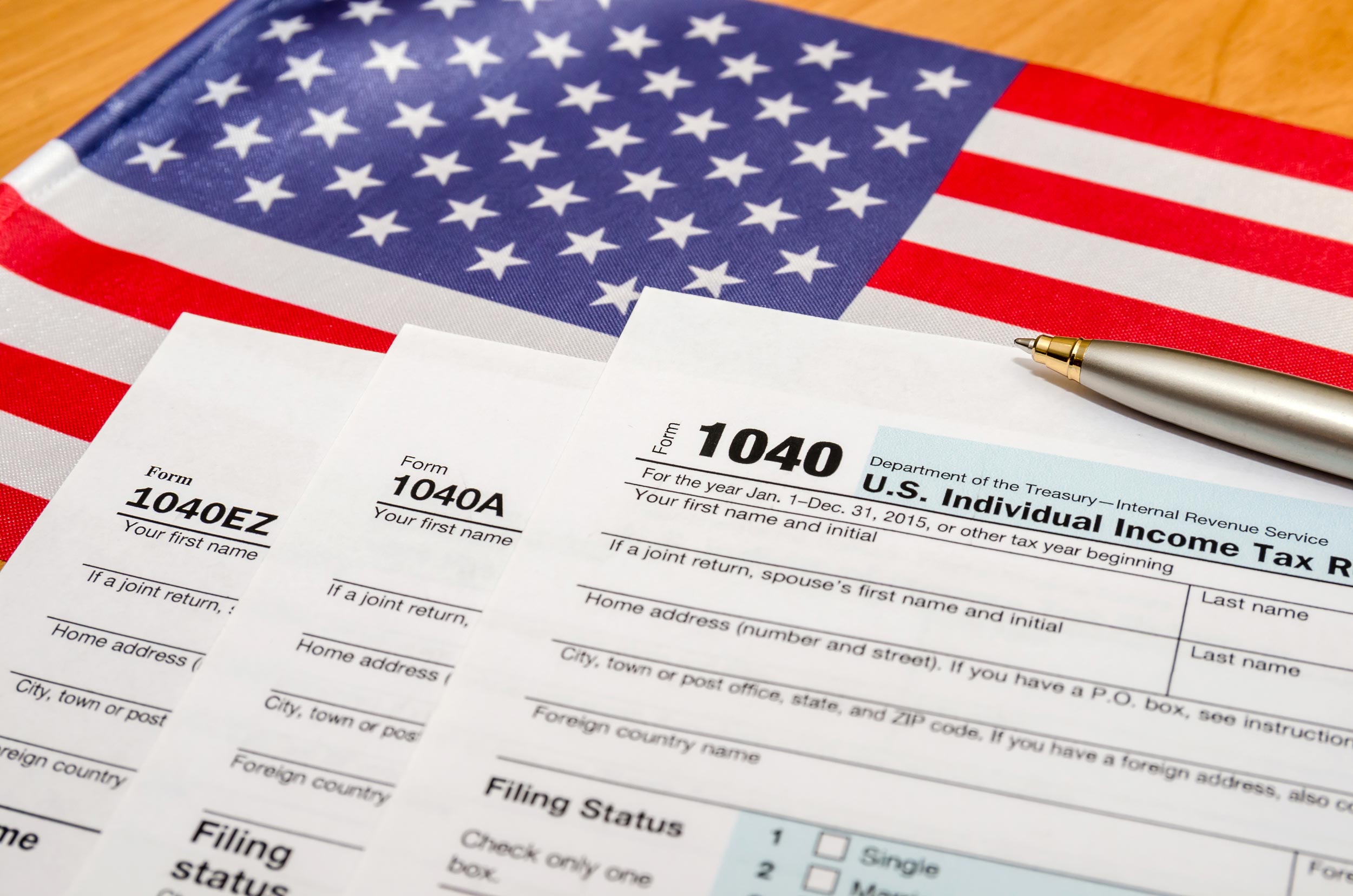
For qualifying taxpayers, the 2026 tax year represents the final opportunity to receive an immediate cash-flow boost at tax time. A taxpayer who qualifies for the maximum 50% tier essentially receives an immediate, risk-free 50% return on their investment. Consider a dual-income couple in Staten Island. If each spouse contributes $2,000 to their traditional IRAs and they qualify at the 50% rate, they secure a $2,000 direct reduction in their federal income tax liability. Simultaneously, they may reduce their state and federal taxable income through their standard traditional IRA deductions, keeping more capital within their household.
This double benefit acts as an incredibly cost-effective subsidy for building long-term wealth. For self-employed individuals and service-based entrepreneurs who struggle to find surplus cash for retirement savings, the combination of current-year tax savings and retirement growth makes the Saver's Credit one of the most powerful tools in the tax code. It actively lowers the real-time cost of saving, allowing you to build financial security with a significant safety net from the federal government.
The 2027 Pivot: Transitioning to the SECURE 2.0 Saver’s Match
For tax years beginning after December 31, 2026, the traditional Saver’s Credit will be retired and replaced by the federal Saver’s Match. Passed as a core provision of the SECURE 2.0 Act of 2022, this update fundamentally alters how the savings incentive is structured and delivered. Instead of receiving a credit that reduces your tax liability on Form 1040, the federal government will deposit the incentive directly into an eligible, non-Roth retirement account of your choosing.
Direct Contributions vs. Tax Reductions
This structural shift means the benefit will no longer help you pay your current tax bill or increase your spring tax refund. Instead, the funds are channeled directly into your retirement account to compound tax-deferred over time. Under the new statute, the match rate is established at a flat 50% of your qualified retirement contributions up to a $2,000 cap, resulting in a maximum federal match of $1,000 per eligible individual. This deposit will be made by the U.S. Treasury, bypassing your tax return entirely. If your computed match falls below a de minimis threshold, such as $100, special provisions may allow you to claim that small amount as a refundable credit on your tax return instead.
Exemptions and the Special ABLE Account Provision
The transition to the match system features a few notable exclusions. Specifically, Roth IRAs and Roth accounts within employer-sponsored plans are ineligible to receive the federal match; matching deposits must go into traditional, pre-tax accounts. Furthermore, the new law carves out an important exemption for ABLE accounts (529A accounts for qualifying disabled individuals). Contributions made to ABLE accounts will not transition to the match system and will instead preserve the pre-2027 tax credit structure, allowing disabled beneficiaries and their families to continue claiming the credit directly on their tax returns.
Navigating MAGI Phaseouts, Administration, and Recovery Risks

The SECURE 2.0 Saver’s Match will phase out across specific MAGI bands that are slated to be indexed for inflation in future years. For the initial 2027 rollout, the statutory phaseout ranges begin at relatively low income thresholds (for single filers, the phaseout begins around $20,500 and ends at $35,500; for married couples filing jointly, the range is higher). Because the match is gradually phased down, maintaining precise control over your MAGI through strategic deductions remains highly critical.
Furthermore, taxpayers must prepare for strict administrative and recovery rules. The law requires retirement plan administrators and IRA custodians to establish systems to receive, track, and report these federal matching contributions on annual information returns. More importantly, the law implements a "recovery tax" on early distributions. If you receive a federal match and subsequently take an early, non-qualified distribution from your account, you will face a specialized tax to claw back the matched funds. To mitigate this risk, taxpayers must maintain detailed records of all matches and avoid premature withdrawals.
Practical Steps to Maximize Your Benefits
To ensure you do not leave free retirement money on the table, consider taking the following actions to prepare for the transition:
- Capture the 2026 Credit: Ensure your retirement contributions are completed before the end of the year or designated as 2026 prior-year contributions by the April 15, 2027 tax filing deadline. If you qualify for the 50% rate, even small contributions yield significant tax relief.
- Conduct a Distribution Audit: Review all retirement withdrawals made by you and your spouse over the last two years to confirm your contribution base will not be reduced by the testing period rules.
- Coordinate Spousal Accounts: If you are married and filing jointly, coordinate your savings to ensure both of you can maximize the individual $2,000 contribution caps, bringing up to $2,000 in total credits to your joint return.
- Confirm Custodian Capability: As the 2027 match approaches, check with your employer’s HR department or your IRA custodian to confirm they are ready to accept and report direct Treasury matching deposits.
- Maintain Meticulous Documentation: Keep organized copies of your contribution receipts, annual statements, and rollover documentation to verify your eligibility and protect against the early distribution recovery tax.
Designing Your Multi-Year Retirement and Tax Strategy
The transition from the Saver’s Credit to the SECURE 2.0 Saver’s Match marks a fundamental policy shift, moving from immediate cash-flow relief during tax season to long-term, incentivized wealth building. Successfully navigating this transition requires proactive tax planning, precise income management, and careful coordination of your retirement accounts.
At Hays CPA LLC, our guiding principle is that "We Go Beyond Accounting." We focus on providing the strategic clarity, structure, and proactive advisory needed to secure your financial future with less stress and greater financial control. Whether you want to optimize your 2026 retirement contributions or structure your accounts for the upcoming 2027 federal match, contact our Staten Island office today to schedule a consultation with our experienced advisory team.
Want tax & accounting tips and insights?
Sign up for our newsletter.